Can You Apply Limewash Over Previously Painted Walls?
Want to apply limewash over a previously painted wall? Learn how to prepare the surface, why the correct primer matters and what to check before applying limewash.
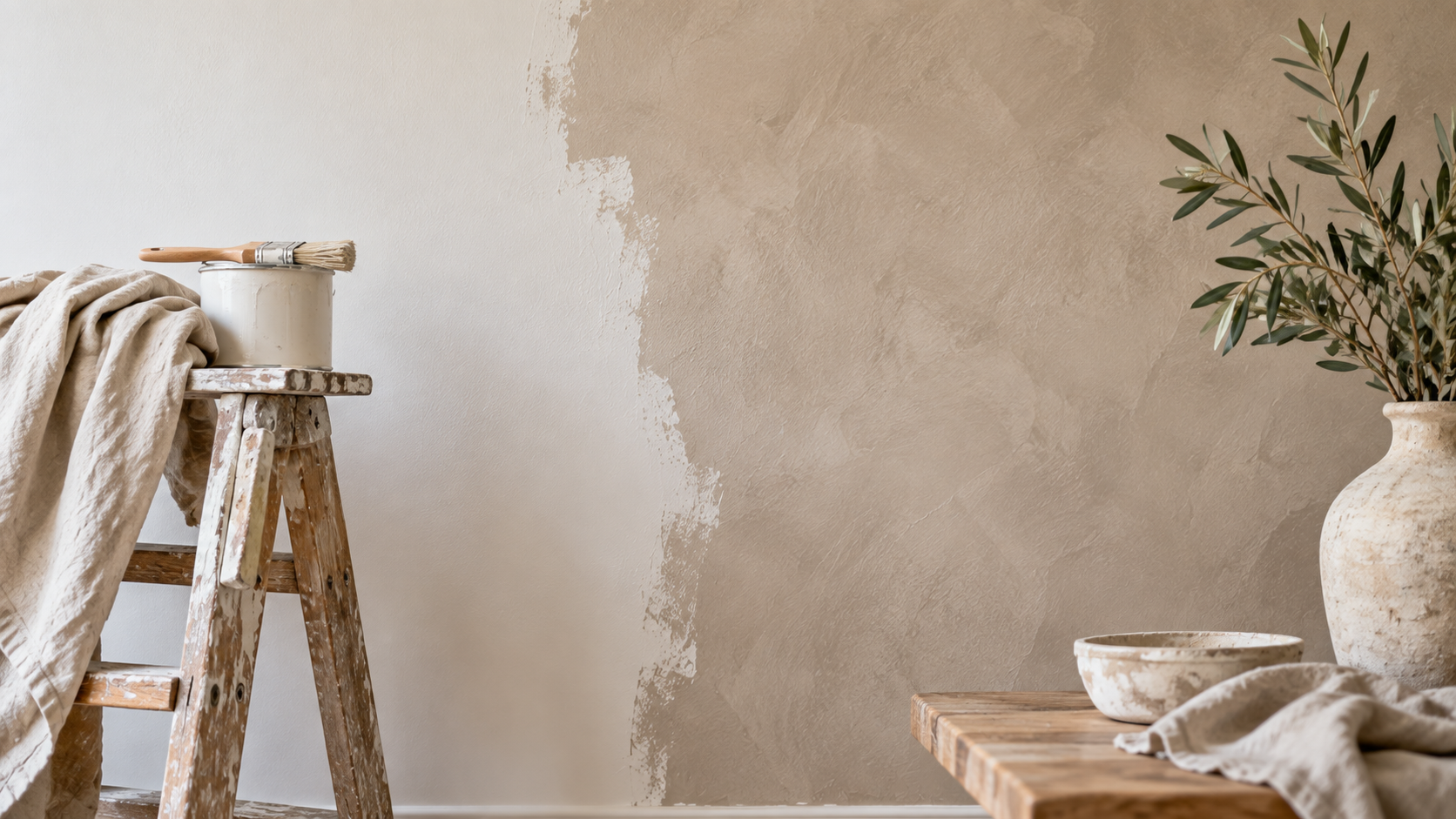
Limewash has made a strong return to contemporary interior design, largely because of its soft, matte texture and subtle tonal variations. Unlike conventional wall paint, which generally creates a more uniform surface, limewash adds movement, depth, and a naturally layered appearance that responds beautifully to changing light. But what happens when the wall has already been painted? One of the most common questions is whether you can apply limewash over paint without completely removing the existing finish.
In many cases, the answer is yes, provided the surface is properly prepared and you use the right primer. Traditional limewash performs best on porous mineral substrates because they allow the material to bond effectively. However, a wall previously coated with acrylic, latex, or another conventional paint is usually less absorbent. Applying limewash directly onto a smooth, sealed painted surface without the appropriate preparation may therefore affect both adhesion and the appearance of the finished wall.
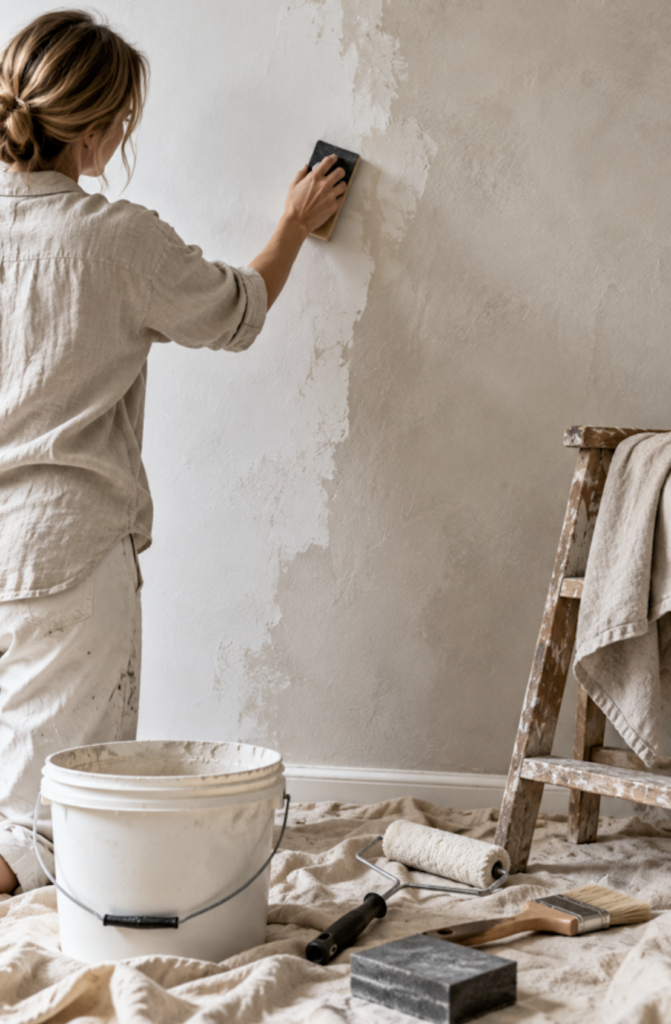
When applying limewash over painted walls, the first step is to assess the condition of the existing surface. The wall should be clean, dry, and sound.
Dust, grease, and other contaminants should be removed, while any loose, flaking, or poorly adhered paint needs to be dealt with before the new finish is applied.
Cracks, holes, and damaged areas should also be repaired. If the existing coating is particularly smooth or glossy, additional surface preparation may be necessary, depending on the specific limewash system and the manufacturer’s application instructions.
For most conventionally painted surfaces, using the correct limewash primer is a particularly important part of the process.
The primer creates a suitable intermediate surface between the existing paint and the limewash, helping to promote adhesion and allowing the characteristic limewash finish to develop more consistently.
However, this does not mean that any standard wall primer will work. The primer should be compatible with both the existing substrate and the specific limewash product being used, so it is always important to follow the manufacturer’s technical recommendations.
Complete removal of the existing paint is not always necessary. If the coating is firmly adhered, stable, and free from significant defects, it can often remain in place before the appropriate preparation and primer system is applied. If the wall shows signs of peeling, bubbling, dampness, or unstable areas, however, these problems should be addressed first. Covering an unstable substrate with a new decorative finish will not resolve the underlying issue and may affect the durability of the final result.
Correct wall preparation for limewash also plays an important role in the appearance of the finished wall. Limewash is not designed to create a perfectly flat and uniform surface. Its beauty comes from subtle colour variations, visible movement and the depth created by the application technique. Natural light can further enhance these variations throughout the day, giving the wall a softer and more dynamic appearance. The chosen colour, substrate, number of coats, and application method can all influence the final finish, which is why no two limewashed surfaces look the same.

So, can you apply limewash over paint? Yes, and in many situations you do not need to strip the wall completely before doing so. What matters most is assessing the existing surface and following the correct preparation process before applying the limewash.
A clean and stable substrate, any necessary repairs, and the appropriate primer for limewash provide the foundation for a successful finish. With the correct preparation, even a conventionally painted wall can be transformed into a surface with the soft texture, tonal movement and natural depth that have made limewash such a distinctive choice for contemporary interiors.