
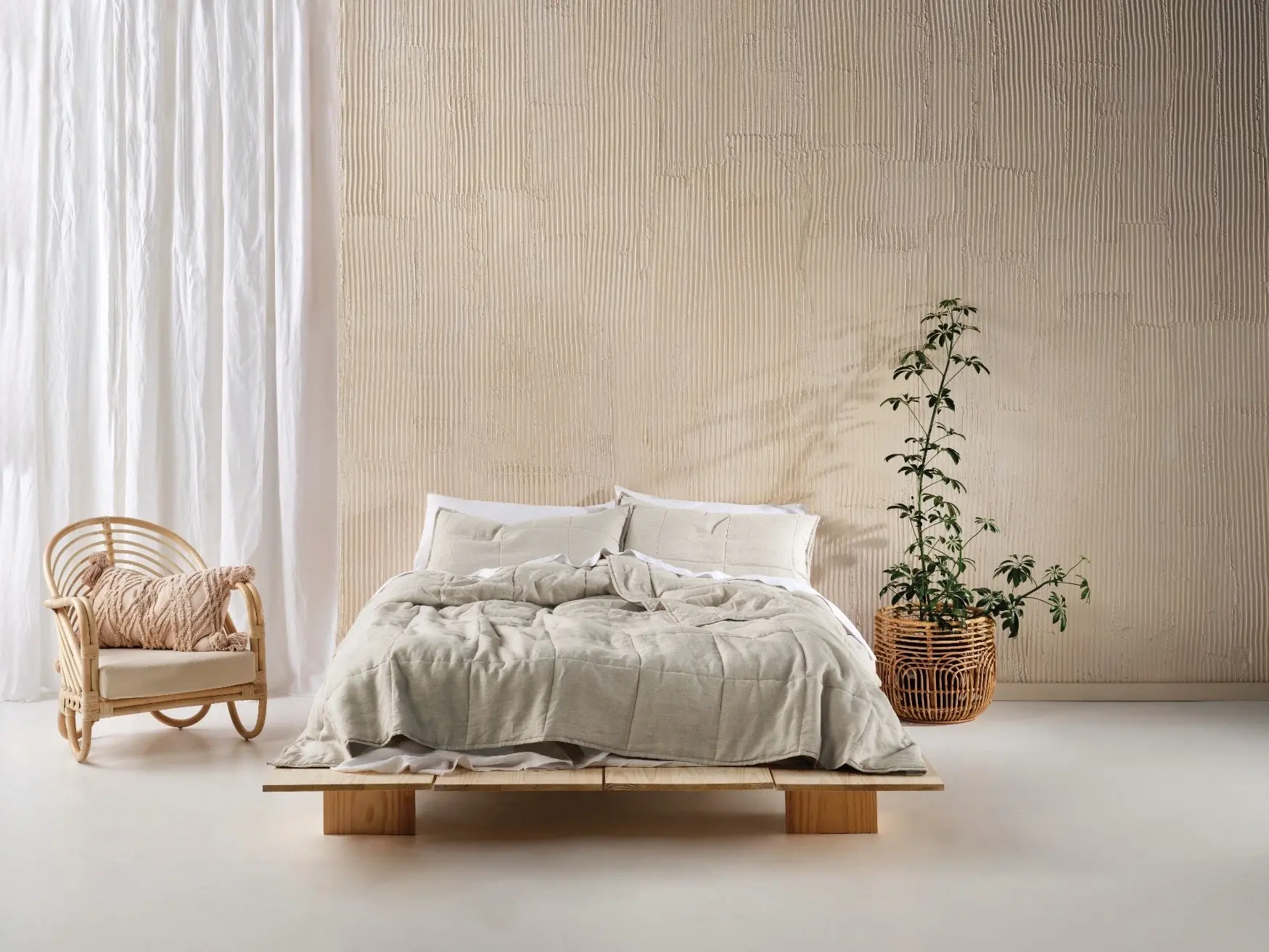
Limewash Walls in Japandi and Wabi-Sabi Interiors
Limewash enhances the natural simplicity of Japandi and Wabi-Sabi interiors through earthy shades, authentic textures and timeless aesthetics.
Japandi interiors and Wabi-Sabi interiors represent two distinct but closely connected approaches to design. Both move away from excess, highly polished surfaces and perfectly uniform finishes. Instead, they embrace natural materials, restrained colour palettes, simplicity and spaces with an authentic sense of character.
Limewash walls complement these qualities through their soft matte texture and subtle tonal movement. Rather than creating a flat, industrially perfect surface, limewash adds depth and responds naturally to changing light throughout the day.
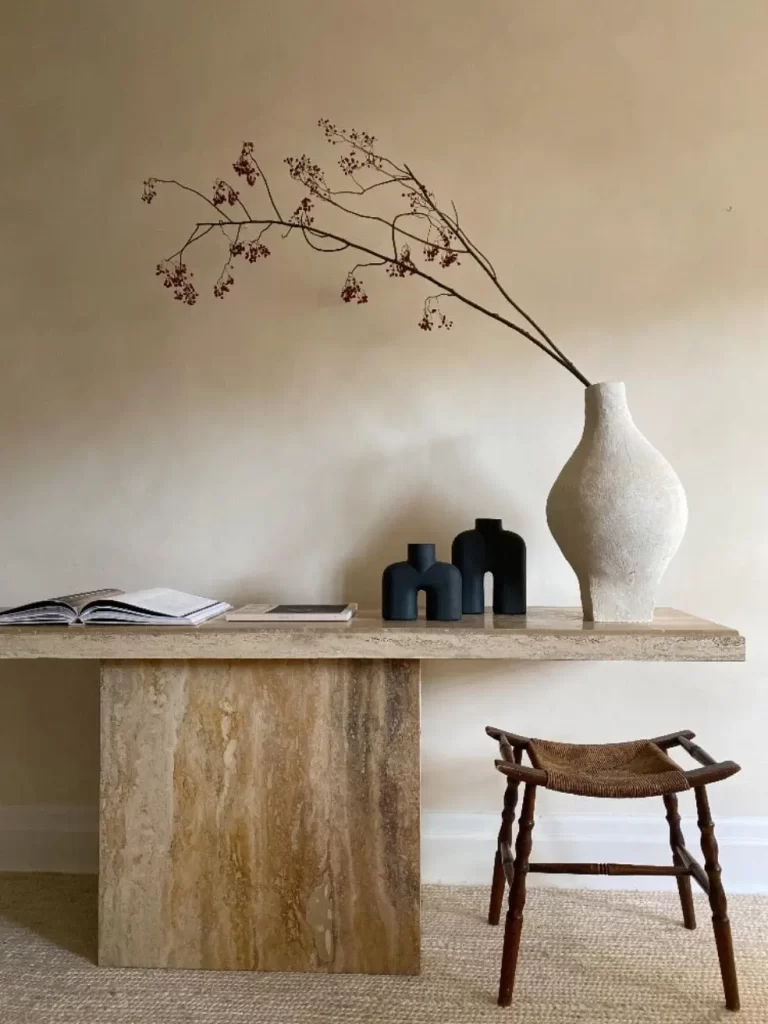
The term Japandi combines the words Japanese and Scandinavian. It describes a contemporary interior style that brings together Japanese simplicity and balance with the functionality, comfort and warmth of Scandinavian design.
From Japanese aesthetics, Japandi draws on clean lines, order, craftsmanship and a close connection to nature. Its Scandinavian influence introduces practicality, natural light and the concept of hygge: creating a welcoming environment that supports comfort and well-being.
Japandi interiors follow the principle of “fewer, better things”. Rather than filling a room with decorative objects, the style favours a limited selection of functional, well-made pieces with timeless design.
Timber is central to Japandi design. Pale oak and ash may be combined with walnut or darker wood to create contrast, while linen, cotton, stone, woven fibres and handmade ceramics introduce warmth and tactile interest. The colour palette typically moves through warm whites and off-whites, sand and beige, soft greige, muted brown, grey-green and olive, complemented by limited black or charcoal accents.
The result is minimal without feeling cold, simple, comfortable and inviting. A strong example from Limewash Paints Greece is the Apartment in Lycabettus Hill, where White Stag was applied to the walls and ceilings, creating a unified interior in which natural light, timber and stone become the main visual elements.
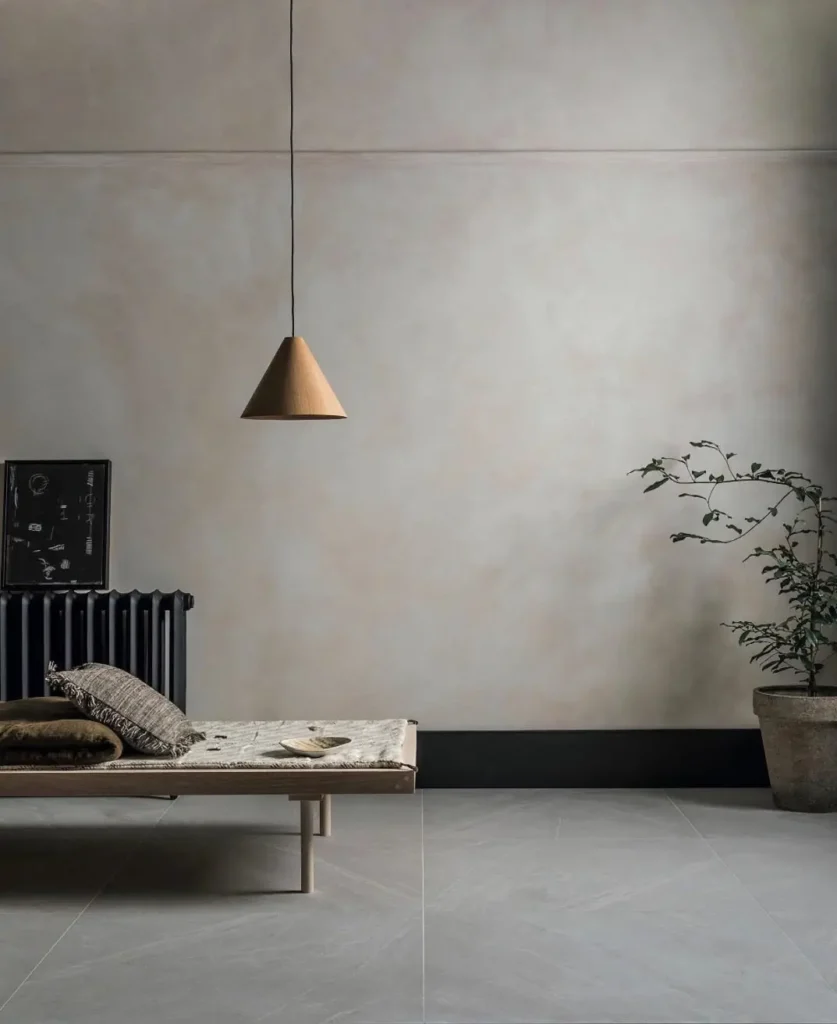
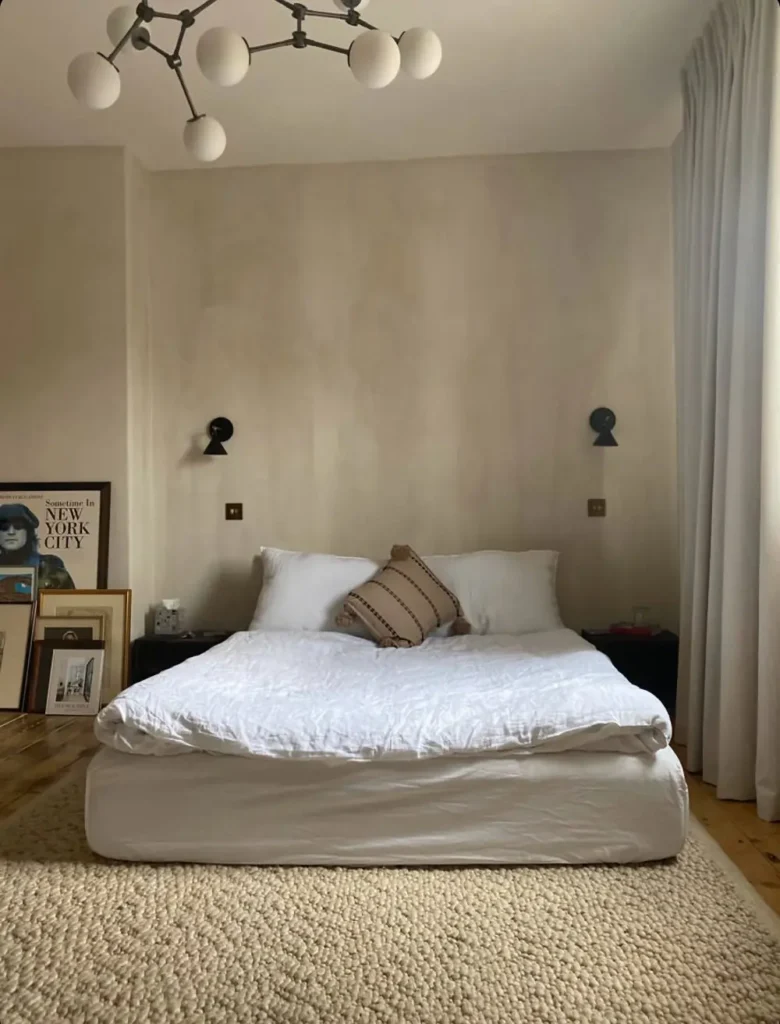
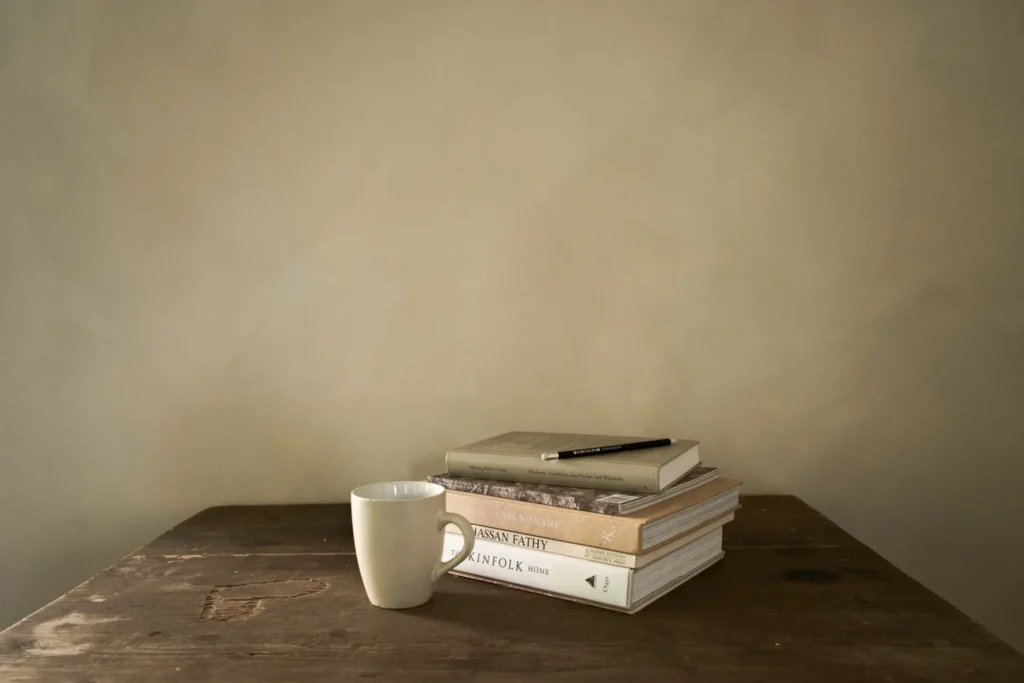
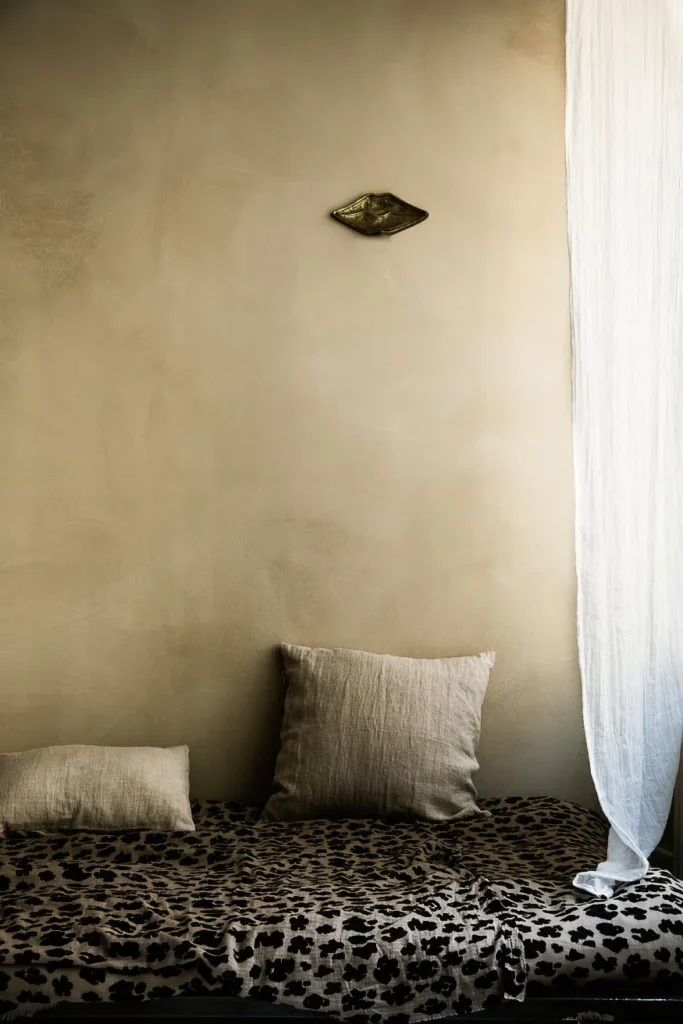
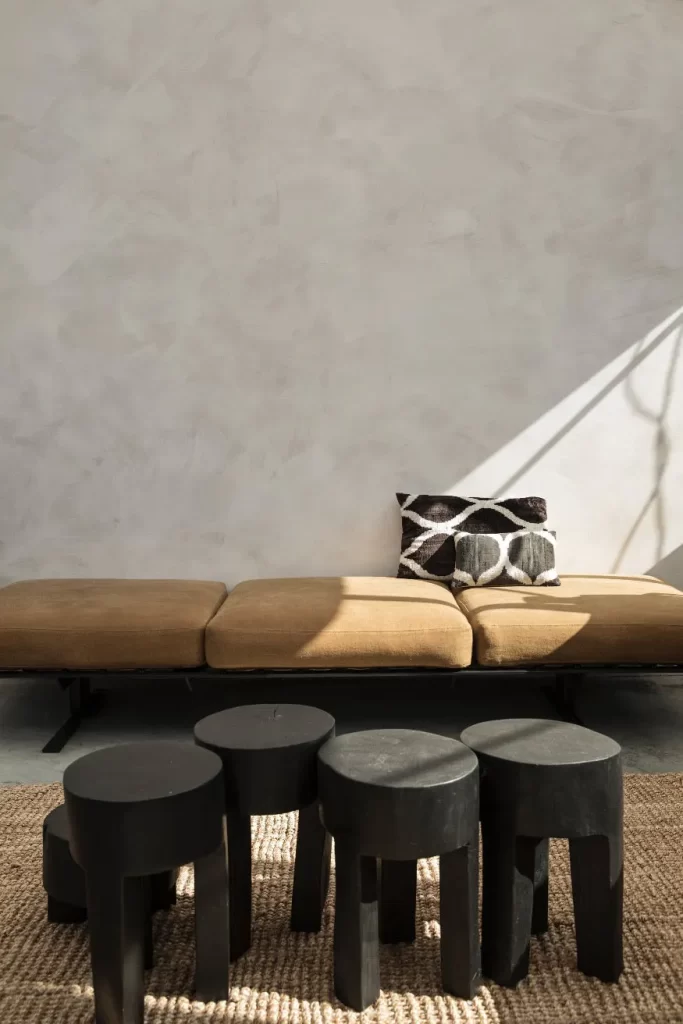
Wabi-Sabi has its roots in Japanese aesthetics and Zen philosophy. It is more than an interior design trend; it is a way of recognising beauty in simplicity, imperfection and the natural passage of time.
The word wabi is associated with simplicity, restraint and a quiet life connected to nature. Sabi refers to the beauty that materials acquire as they age, including patina, weathering and visible traces of time.
Together, these ideas express an appreciation of impermanence and individuality. An irregular handmade ceramic, visibly grained timber or a wall with natural tonal variations is valued because it is unique rather than perfectly manufactured.
Wabi-Sabi interiors feel calm, understated and naturally imperfect. Rather than appearing overly designed, each space develops its character through honest materials and objects that reveal how they were made. Raw or aged timber, natural plaster, stone, handmade ceramics, linen and other natural textiles are often combined with curved or irregular architectural surfaces. Shades inspired by clay, earth and concrete reinforce the organic atmosphere, while visible marks of craftsmanship celebrate imperfection and authenticity.
The 10AM Lofts & Penthouse offers a strong example, where lime plaster and Bauwerk lime paint in the shade Mykonos create an atmosphere of “rough luxury”, combining raw wall texture with dark timber, stone and minimal architectural lines. The Underground Dwelling in Oia presents a lighter expression of Wabi-Sabi through curved walls, mineral plaster and a close connection to the surrounding landscape.
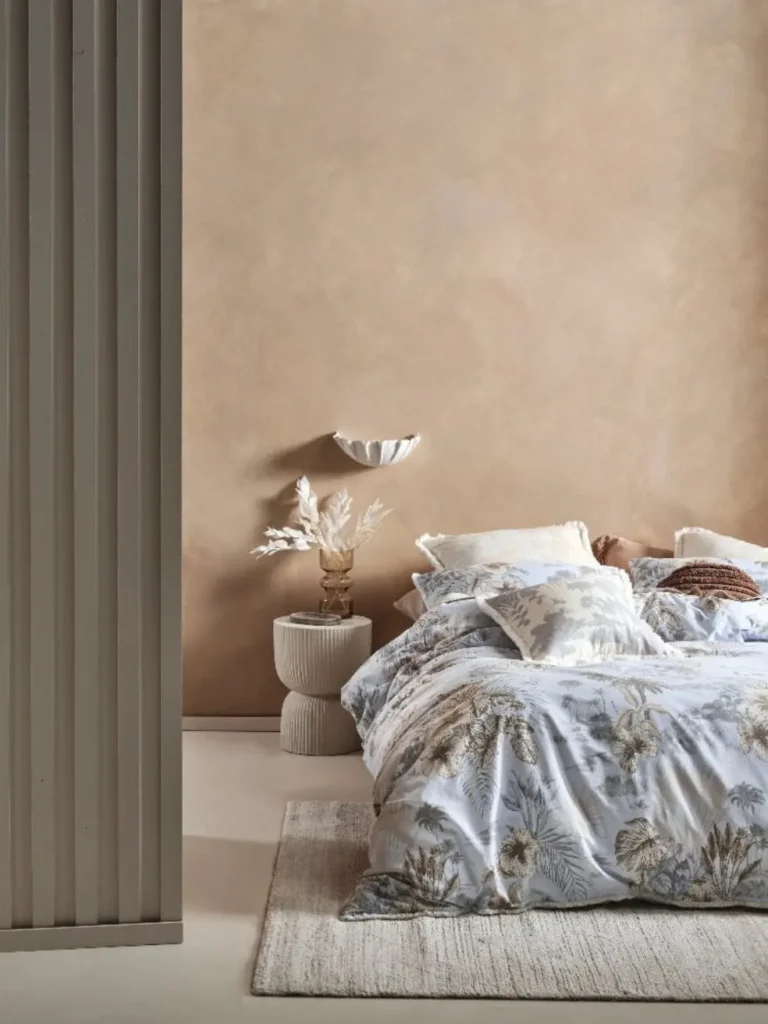
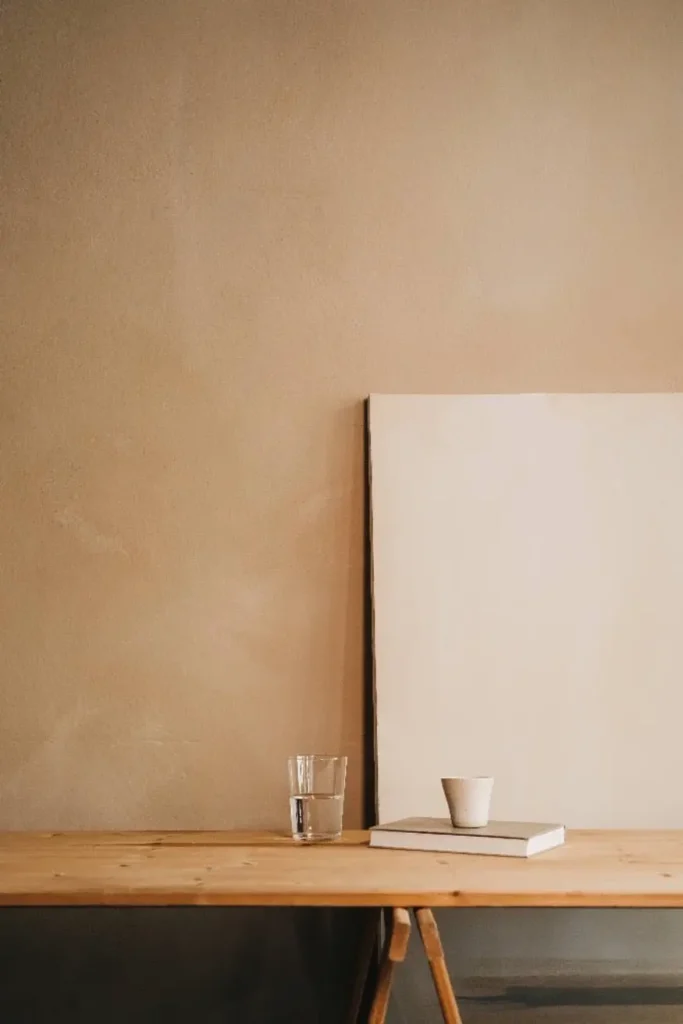
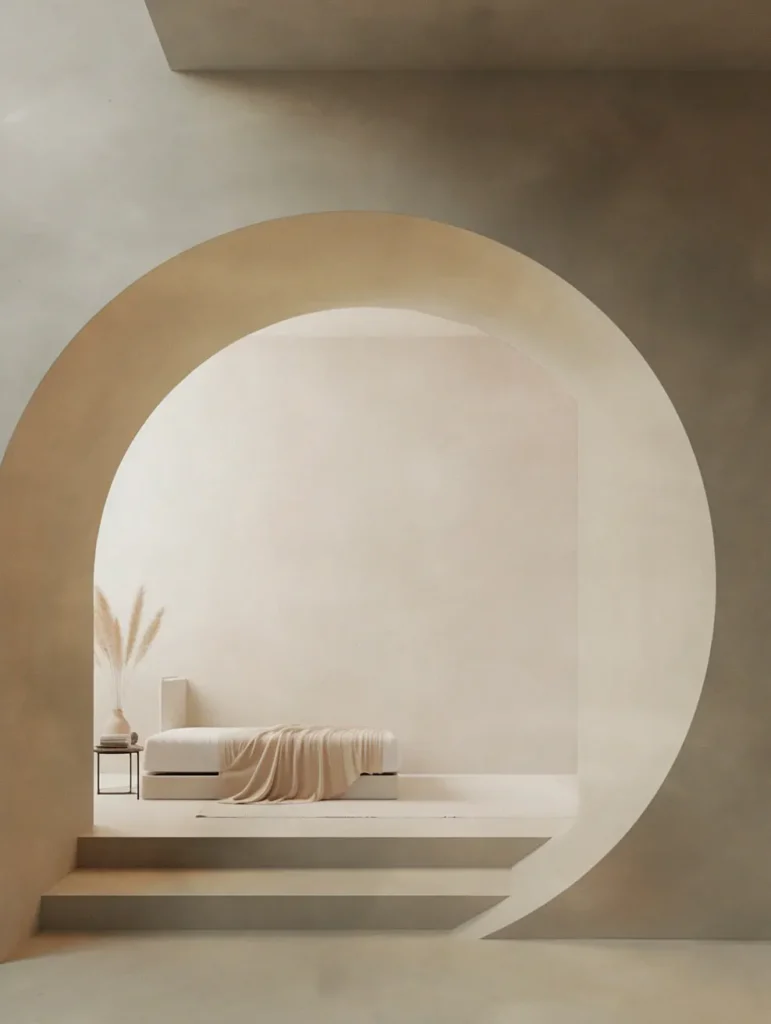
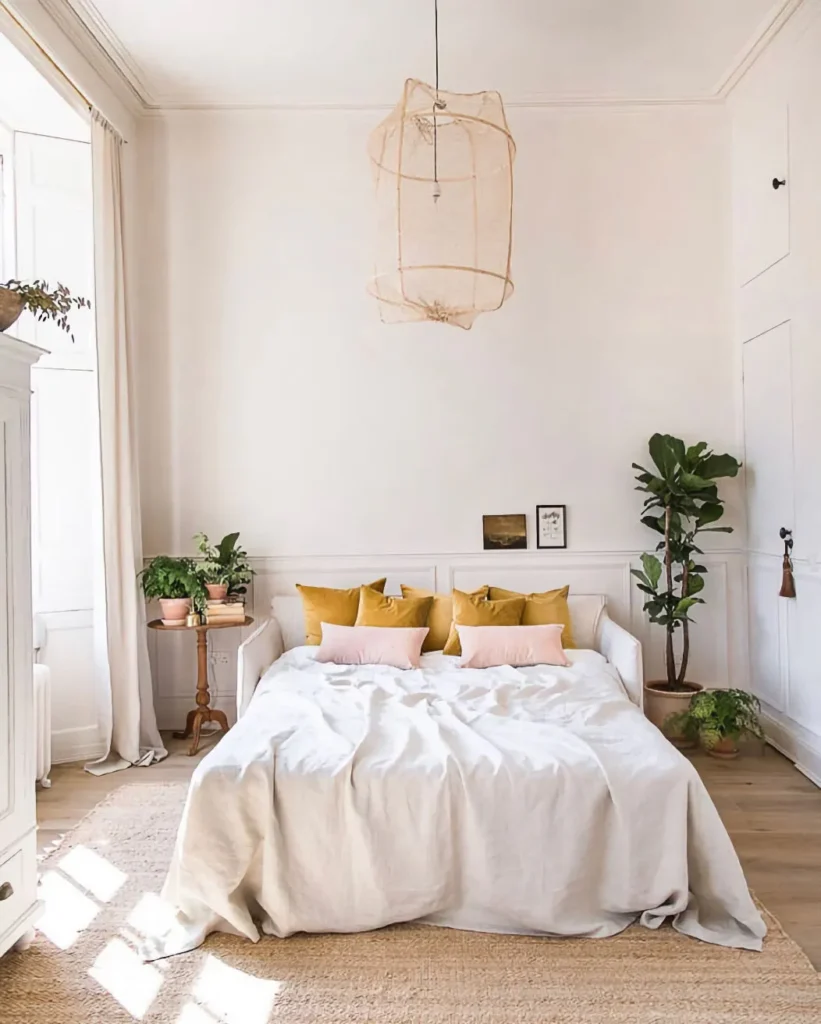
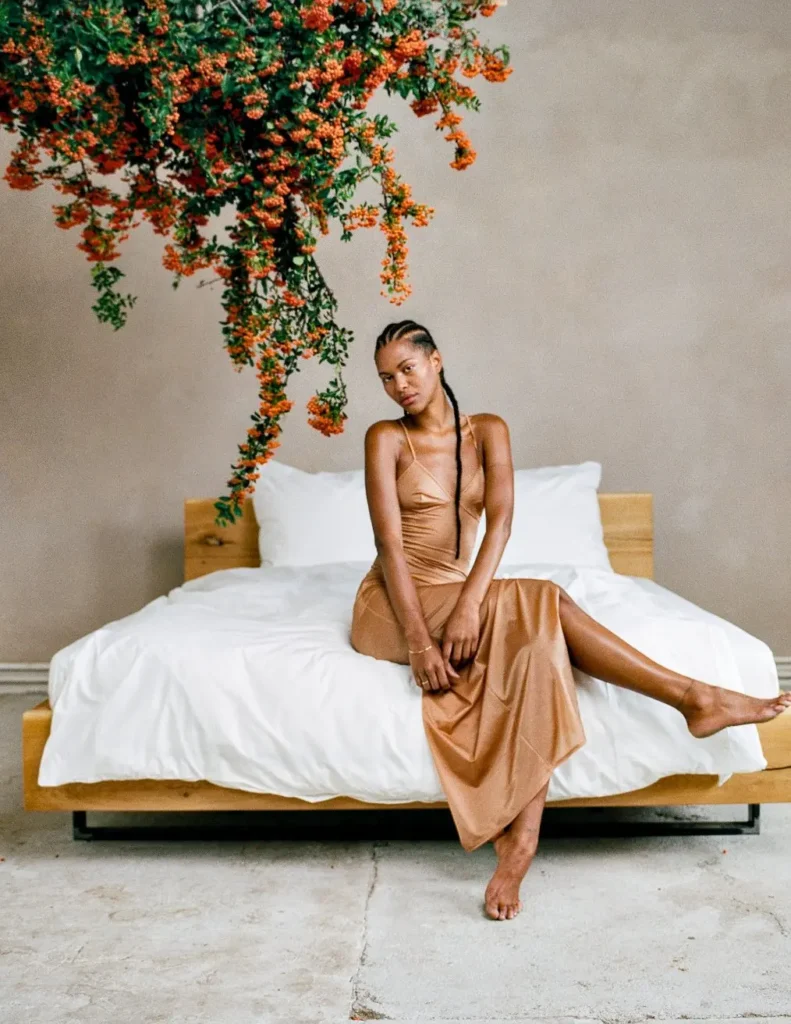
Japandi is more structured, functional and controlled. It emphasises balanced proportions, clean lines and efficient use of space.
Wabi-Sabi is more raw and instinctive. It gives greater importance to irregularity, patina, weathering and the natural ageing of materials.
However, both styles:
- Avoid unnecessary decoration
- Prioritise natural materials
- Use quiet, earthy colour palettes
- Appreciate craftsmanship
- Create calm, timeless interiors
Authentic limewash does not create a perfectly flat or plastic-looking surface. Its mineral pigments and calcite crystals interact with light, producing gentle shadows and natural tonal variations.
Within a Japandi interior, this texture adds warmth and depth without disrupting the clean visual language. In a Wabi-Sabi space, it highlights imperfection, craftsmanship and the organic character of the wall.
Bauwerk Limewash is also a natural mineral paint made without VOCs or solvents. When used as part of a correctly prepared system, it creates a vapour-permeable finish that allows suitable walls to breathe.
Learn more about its composition in What Is Limewash Paint?